Entry into St. Peter's Basilica is free for everyone, with no ticket and no reservation. The trade-off is the line at the security check, which can reach one to two hours in high season. Only climbing the dome is paid, with two options: the full staircase, or the elevator followed by a stretch on foot. The Vatican Grottoes, beneath the basilica, are also free. The necropolis, known as the Scavi, where the tomb attributed to St. Peter lies, requires a separate reservation through the excavations office, and spots are very limited.
In this article you will learn how to get in without losing a morning, what to see inside, what climbing the dome involves, and how to access the underground levels.
What you should know before you go
The current basilica was built between 1506 and 1626, on the site of an earlier church raised by Emperor Constantine in the 4th century. Bramante, Raphael, Michelangelo, Maderno, and Bernini all worked on it in succession.
It is the largest church in the world. Michelangelo's dome rises to about 136 meters and measures roughly 42 meters in interior diameter.
A useful clarification: St. Peter's Basilica is not the cathedral of Rome. The cathedral of the Diocese of Rome is Saint John Lateran. St. Peter's is a papal basilica, which is not the same thing.
Getting in without losing your morning
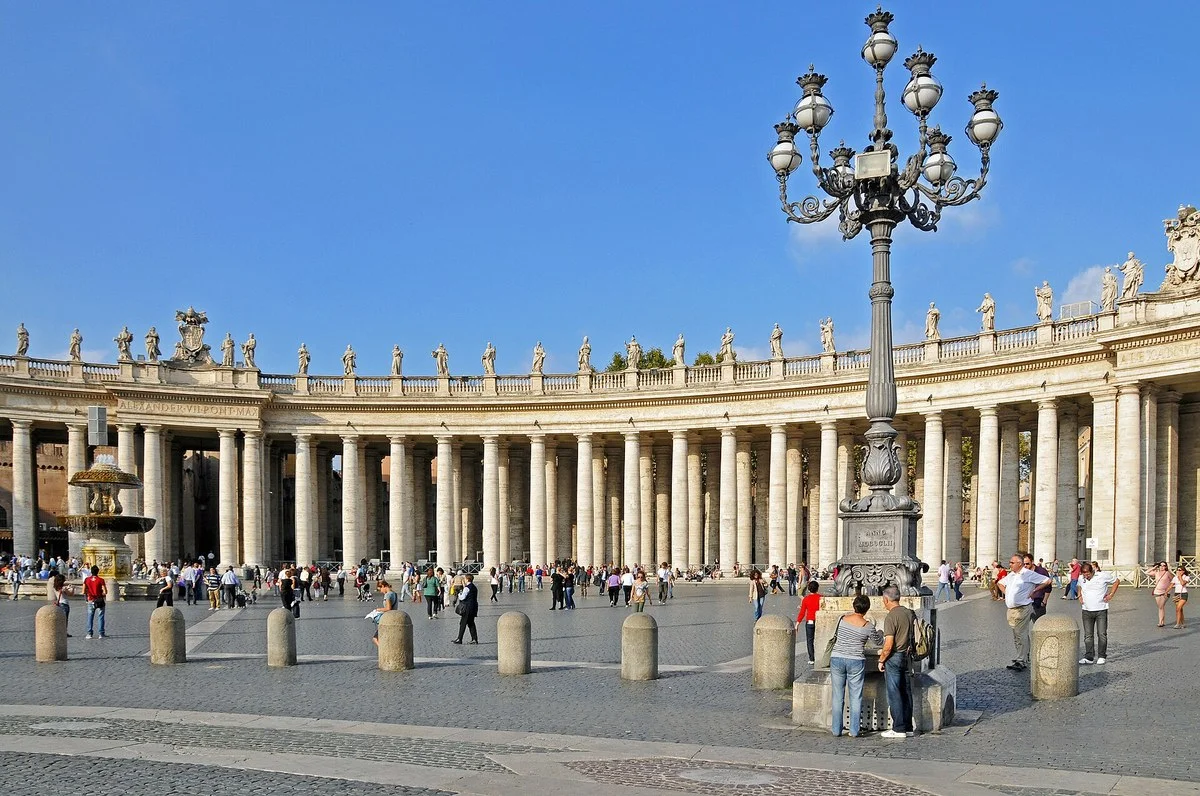
Access is through St. Peter's Square, at the checkpoints located in the right-hand hemicycle of the colonnade when facing the basilica. The check is airport-style, run by the Italian police.
In high season, from April to October, the line frequently exceeds an hour and can reach two hours.
Three strategies work.
- Arrive at opening, early in the morning. It's the most effective method and it costs nothing
- Come in the early afternoon, once the morning line has cleared
- Book a guided tour or priority access, which gives you a dedicated entrance
A fourth option exists, and it's less known. Groups visiting the Vatican Museums with a guide can use the direct passage from the Sistine Chapel to the basilica, entirely bypassing the line on the square.
Days to avoid
The basilica's official site says so itself: the busiest days are Wednesday and Sunday.
Wednesday morning. The pope's general audience is held on St. Peter's Square or in the Paul VI Audience Hall. The basilica becomes inaccessible or access is heavily delayed during the morning.
Sunday at noon. The pope recites the Angelus, the square fills up, and the security check backs up.
These events carry obvious spiritual interest, but if your goal is a quiet visit to the basilica, these are two time slots to work around.
What to see inside
| Work | Where | What to know |
|---|---|---|
| Michelangelo's Pietà | First chapel on the right when entering | Carved when he was about 24. The only work he ever signed. Protected behind glass since an attack in 1972 |
| Bernini's baldachin | Above the papal altar | About 29 meters of bronze, twisted columns, nearly nine years to build |
| Michelangelo's dome | At the center | Seen from inside, its proportions are overwhelming |
| The statue of St. Peter | Central nave, right side | The right foot is worn smooth by pilgrims' kisses and touches |
| The Chair of St. Peter | In the apse | Bernini composition, light filtered through alabaster |
Allow one hour to an hour and a half for the basilica alone, longer if you take the time to sit.
Climbing the dome
This is the only paid part of the visit. Two options exist.
- The full staircase, 551 steps
- The elevator to the terrace, then about 320 steps on foot
The elevator does not spare you the climb entirely. It covers the first stretch, but the final portion, within the thickness of the dome, must be done on foot.
A serious warning. The last passages are narrow, sloped, and the wall leans with the curve of the dome, so you climb at an angle. It's physically demanding and genuinely uncomfortable for anyone claustrophobic. Those who prefer to stop can stay at the intermediate terrace, which already offers a superb view over the square and into the basilica.
The dome's hours vary by season, generally opening in the morning with a later closing from April to September. Access may change on celebration days and on Wednesday mornings. Check ahead on the basilica's official website.
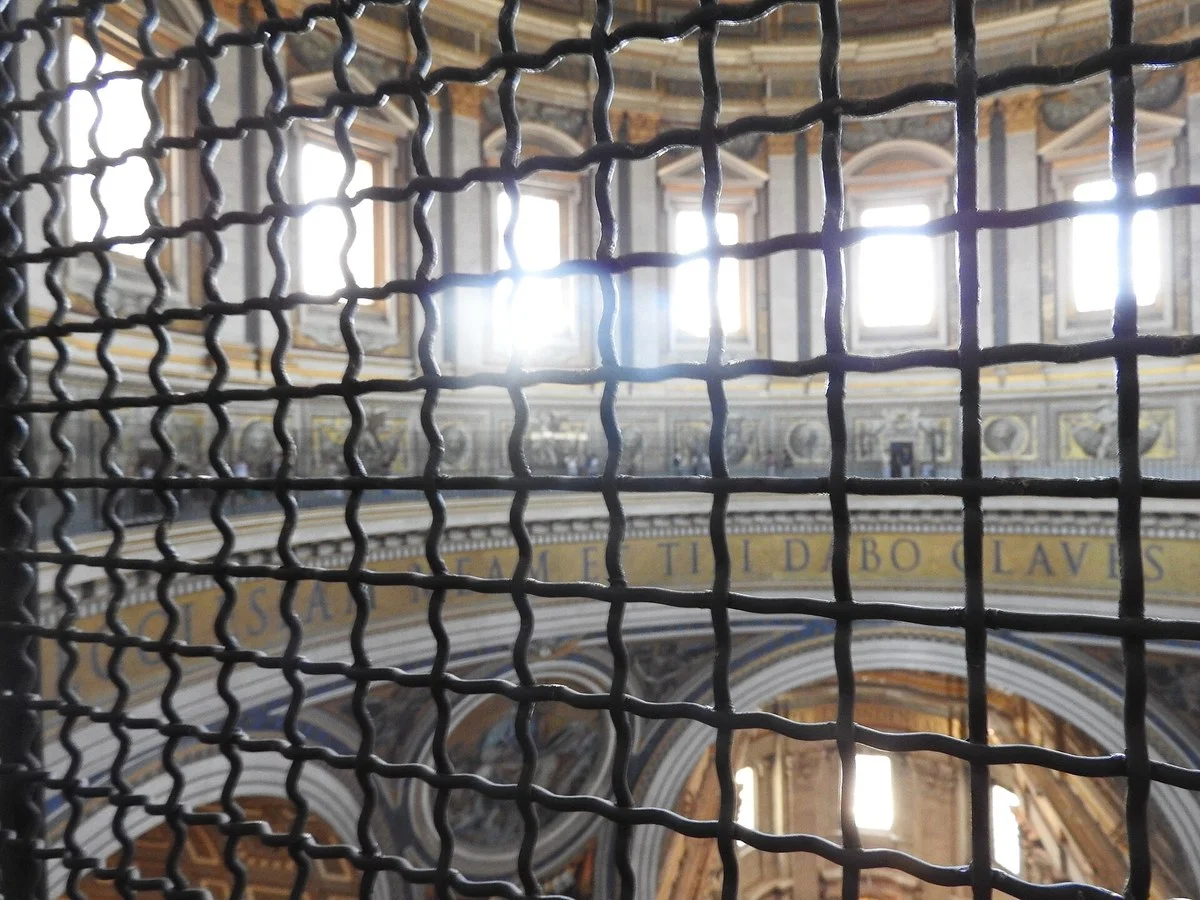
On the first terrace, take the time to look closely at the mosaics. Seen from a few centimeters away, they reveal details completely invisible from the floor of the basilica.
The Vatican Grottoes
Beneath the floor of the basilica lie the grottoes, created when the current building was constructed over the Constantinian basilica.
Many popes are buried there, including John Paul II. Access is free and is reached through the piers that support the dome. There is no strictly published schedule; access follows that of the basilica.
The necropolis, known as the Scavi
This is the deepest level, and the hardest to access. It is the ancient necropolis where the tomb attributed to St. Peter lies.
The conditions are strict.
- Reservation required through the excavations office, the Ufficio Scavi
- Very limited spots, to be requested several months in advance
- No backpacks, no suitcases, no cameras allowed inside
- Free coat check to the right of the basilica's façade
- Strict dress code: shoulders covered, long pants for men, skirts below the knee or pants for women
- Check in at the excavations office ten minutes before the scheduled time, with your confirmation
The office is located on Via Paolo VI, near the left colonnade. This is not an ordinary tourist visit, and the atmosphere is unlike anywhere else in the Vatican.
The dress code
Shoulders and knees covered, for men and women alike. Tank tops, short shorts, and miniskirts result in denied entry.
The enforcement is real, and there is no recourse on site. A light scarf in your bag solves the shoulder issue. For legs, you need to plan ahead before leaving the hotel.
Masses and celebrations
Several Masses are celebrated in the basilica every day. Some papal celebrations require a free ticket, requested in advance through the Prefecture of the Papal Household.
The same is true of the Wednesday general audience, free but ticketed.
The basilica remains, above all, a place of worship. Silence and respectful behavior are expected there, which is not always easy amid the flow of visitors.
Getting there
Metro line A, Ottaviano-San Pietro station, then about a ten-minute walk. Several bus lines serve the area, but they are known pickpocket territory. Driving is not recommended, parking is limited.
Conclusion
St. Peter's Basilica is free, and that is precisely what creates its main obstacle: the line. Arriving at opening remains the simplest and cheapest solution.
The dome is worth the effort, provided you accept narrow passages and a genuine climb. The grottoes are accessible with no process at all. The Scavi require a reservation months in advance, but offer the most powerful experience on site.
To plan the full day, see visiting the Vatican. For museum tickets, see Vatican Museums tickets.
Frequently asked questions
- Is entry into St. Peter's Basilica paid?
- No, admission is free for everyone, with no ticket and no reservation. Only climbing the dome is paid. The Vatican Grottoes, beneath the basilica, are also free. However, free entry leads to security-check lines that frequently exceed an hour in high season.
- How many steps are there to climb the dome?
- The full climb on foot is 551 steps. With the elevator, which goes up to the terrace, about 320 steps remain to climb. So the elevator does not spare you from walking. The last passages are narrow and sloped, and the climb is not recommended for anyone claustrophobic.
- How can you visit St. Peter's tomb?
- The tomb is located in the Vatican Necropolis, known as the Scavi. Visiting requires a reservation through the excavations office, the Ufficio Scavi, several months in advance, since spots are very limited. No bags or cameras are allowed, and the dress code is strict.
- When is the basilica busiest?
- On Wednesdays, the day of the pope's general audience, and on Sundays at noon, during the Angelus. Both moments create congestion on the square and at the security check. Outside those windows, high season from April to October remains busy. The first hour of the morning is the quietest time.